


MTB & E-MTB Haute Route: The Complete Guide to Riding Chamonix to Zermatt (2026)

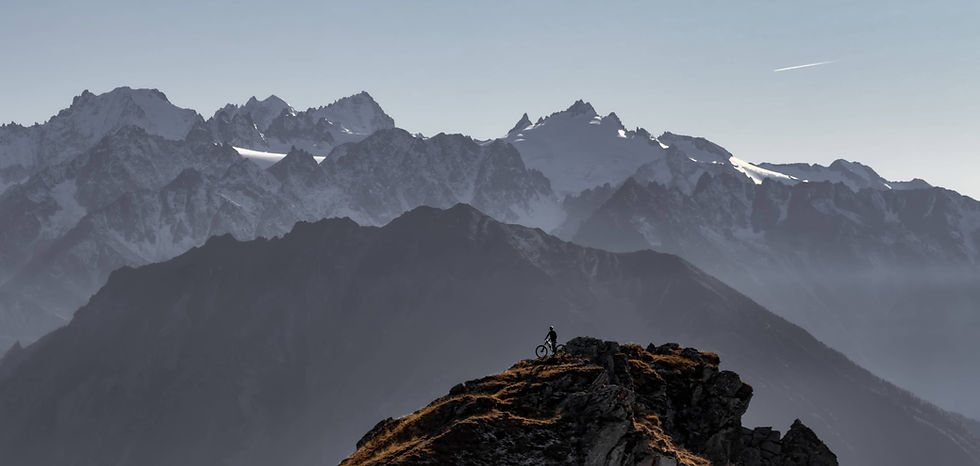
The Haute Route is the closest thing mountain biking has to a pilgrimage. A point-to-point traverse from the foot of Mont Blanc in Chamonix to the foot of the Matterhorn in Zermatt, crossing the highest ridges of the Swiss Alps on pristine singletracks.
No circuit, no loop. Just westward valleys, 4,000-metre peaks above you, and one of the most storied mountain ranges on earth rolling out beneath your wheels for four to seven days.
And here is the best news for 2026: the Haute Route is now more accessible than ever. Whether you ride a traditional MTB or an e-MTB, with the right guide and the right itinerary, this journey can be adapted to almost any rider. The mountains are still big. The views are still extraordinary. But you no longer need to be a racer to earn them.
This is the complete guide — built from years of guiding international riders on both MTB and e-MTB through every stage, in every weather, at every fitness level.

What Is the MTB & E-MTB Haute Route?
The Haute Route — French for "high route" — was originally a ski mountaineering traverse first completed in 1911, linking Chamonix to Zermatt through high alpine passes that most people never see. Mountain bikers adapted it into what is now widely considered the most iconic multi-day MTB traverse in Europe. In the last five years, the arrival of capable e-MTBs has transformed it again — opening the route to riders who love the mountains but don't want to spend six hours a day grinding uphill.
The route covers roughly 250–300 km depending on which variant you ride, with total elevation gain between 10,000 m and 14,000 m across four to seven days. It crosses through the Swiss canton of Valais, traversing remote valleys including Val Ferret, Val de Bagnes, Val d'Hérens, and Val d'Anniviers before descending into Zermatt.
What makes it exceptional is the combination of scale and access. The Swiss Alps are vast, but the infrastructure — mountain huts, valley hotels, cable cars — means the route is achievable without camping. You sleep in beds, eat hot meals, and start each morning in a different valley.
MTB or E-MTB? Both Work Beautifully
One of the most common questions we get is whether the Haute Route is "better" on a traditional MTB or an e-MTB. The honest answer: they are both excellent, and the best choice is the one that matches how you want to experience the week.
Choose a traditional MTB if you love earning every descent, you are confident with long climbing days, and the purity of a self-powered journey is part of the appeal.
Choose an e-MTB if you want more energy for the descents, you want to cover more terrain in the same day, you are riding with a mixed-ability group, or you want the freedom to enjoy lunch stops and photo breaks without worrying about the clock. Modern e-MTBs with 750 Wh batteries have genuinely opened this route to riders who would never have considered it five years ago.
In our groups in 2025, over half the riders chose an e-MTB.
The Two Main Route Options
Option A: Verbier to Zermatt (4–5 Days)
The most popular version for riders with limited time, and the ideal introduction to the route. Starting in Verbier — itself one of the best MTB and e-MTB destinations in Europe — this variant cuts straight to the core of the Swiss Alps and maximizes singletrack per day.
Day 1 — Verbier Warm-Up
A shakedown day on the best flow trails of the 4 Vallées. You calibrate the bikes, find your legs, and get a taste of what Verbier's local trail network actually looks like when you know where to go. Stats: 35 km | +800 m / −2,500 m
Day 2 — Verbier to Evolène
The ride crosses into the wild Val d'Hérens via high passes and long loamy forest descents. The valley drops you into a world that feels untouched — stone villages, Gothic chapels, pure nature and culture. Stats: 45 km | +1,600 m / −2,200 m
Day 3 — Evolène to Grimentz (The Queen Stage)
The most spectacular day on the route. A high-altitude traverse under a wall of 4,000-metre peaks — the Dent Blanche, the Weisshorn, the Zinalrothorn — into the Anniviers valley. This is the stage that makes the Haute Route what it is. Stats: 42 km | +1,800 m / −1,800 m
Day 4 — Grimentz to Zermatt
The grand finale. Valley trails, singletrack, and the Matterhorn growing larger on the horizon until you roll into the car-free streets of Zermatt.
Stats: 38 km | +1,000 m / −1,400 m
Day 5 (Optional) — Zermatt Exploration
A relaxed final day. Riding the high trails above Zermatt with unobstructed views of the Matterhorn from every angle.Stats: 30 km | +800 m / −2,000 m
Option B: Chamonix to Zermatt (6–7 Days)
The full traverse. Starting in Chamonix at the foot of Mont Blanc, this version adds two additional stages through the French-Swiss frontier — crossing the Col de la Forclaz, the Trient plateau, and dropping into Val Ferret before entering Switzerland through Champex-Lac.
The extra days add significant mileage through varied terrain, more border-crossing intrigue, and the full narrative arc of the route: from the glacier-hung north face of Mont Blanc all the way to the Matterhorn. If you have the time, this is the version to ride.
How Difficult Is the MTB & E-MTB Haute Route?
Here is the most important thing to understand about the Haute Route: the route adapts to you, not the other way around.
As a private-group-only operator, we don't run fixed-difficulty tours. Every trip is built around your group. If you're a team of strong riders who want to go deep, we'll put the most technical stages in front of you. If you're a mixed-ability group who want a spectacular week with manageable days, we restructure the route — shorter climbs, more cable car assists, smoother descent lines.
This is the central advantage of private guiding and it's what makes the Haute Route accessible to far more riders than people assume.
On a traditional MTB: If you ride regularly and are comfortable on flowing red trails, you have what you need. Most of our MTB clients are confident weekend riders, not racers.
On an e-MTB: The barrier to entry is significantly lower. Riders who are relatively new to multi-day riding, or who don't have the training time for long climbs, find the e-MTB Haute Route a genuinely achievable goal. Fitness still matters for descent focus and overall endurance, but the climbing demands drop substantially.
What we adapt day by day:
Daily distance (from 25 km short days up to 50 km full stages)
Technical difficulty of descent lines (every day has multiple options)
Use of cable cars to shortcut climbs on tough weather days
Easier recovery days inside the week
Pace — because you are a private group, there is no "pack" pushing you faster than you want
You ride at the pace you want. That is the promise.

The E-MTB Haute Route: What You Actually Need to Know
E-MTB ridership on the Haute Route has grown dramatically, and the reasons are simple: more energy for the descents, less pressure on the climbs, and the ability to cover real distance through stunning country without it feeling like a sufferfest.
If you're considering the e-MTB version, here's what matters in practice.
Battery range is the one real variable. A modern 750 Wh battery is more than enough to complete any Haute Route stage — but only if the logistics are handled properly. Daily climbs of 1,500–2,000 m at altitude consume power, and running dry at the wrong time means pedalling 25 kg of bike up an alpine pass. Nobody wants that.
What we handle so you don't have to think about it:
Strategic charging stops at mid-day restaurants and mountain huts along the route
Spare batteries carried by our support vehicle where needed
Daily range planning so you know exactly how the power budget works for each stage
Real-time adjustment if conditions change
With the logistics sorted, you ride how you want. Turbo up the steep sections, enjoy the push on the long climbs, use the motor to keep up with stronger riders in the group — this is your holiday. The whole point of bringing an e-MTB to the Haute Route is that you get to use it. Our job is to make sure the power is always there when you want it.
The Best Time of Year to Ride the Haute Route
July and August are the prime months. The high passes are clear of snow, the trail surfaces are at their best, the mountain huts are open, and the long daylight hours mean you are never racing the clock.
Late June is possible — early-season passes may hold late snow patches but most of the route rides well, and trails are often at their greenest.
September is arguably the finest month for many riders. The summer crowds are gone, the light is extraordinary, the forests are beginning to turn, and the trails are often in the best condition of the year. For mixed-ability groups and e-MTB riders, September is a particularly strong choice because the weather is settled and the temperatures are perfect for longer days in the saddle.
The weather reality: Alpine weather is unpredictable at any time of year. This is where a local guide earns their keep — we build buffer time into every itinerary and know exactly which stages can be shortened, which valley roads serve as alternatives, and where the bad-weather backup trails are. You'll never get stuck in a storm on an exposed ridge with us.

What to Pack for the Haute Route
Bike and components (both MTB and e-MTB):
Full suspension trail or enduro bike (140–160 mm travel). For e-MTB: any modern full-power e-MTB with 700 Wh+ battery works perfectly.
Reinforced tyre casing — Maxxis DoubleDown, Schwalbe Super Gravity, or equivalent. The schist and gneiss rock in the Swiss Valais eats lightweight tyres.
Spare tubeless plugs, a CO₂ inflator, and one spare tube minimum.
Dropper post is essential.
Clothing:
Waterproof jacket that compresses small enough to fit in a pack.
Arm warmers and knee warmers for cool alpine mornings.
Two sets of riding kit minimum.
Warm layer for evenings in the valleys.
Helmet; knee pads optional but worthwhile for the technical descents.
For luggage-supported trips (ours): You pack one main bag that is transferred between hotels each day and ride with only a 10–15 litre pack carrying water, snacks, a jacket, and a basic tool kit. This is how the Haute Route should be done.
Guided vs. Self-Guided: What You Need to Know
The Haute Route can technically be ridden self-guided. The logistics, however, are significant. A self-guided attempt requires you to manage independently:
All accommodation bookings (huts and hotels fill months in advance for July and August)
Luggage transfers between each stage — requiring pre-arranged and costly van logistics in each valley
Route navigation, including the local trail variations that are not on any GPS track
Mechanical support — a snapped derailleur hanger in Val d'Anniviers means an hour's drive to the nearest bike shop
Weather contingency planning and real-time route modification
For e-MTB riders: charging point research, spare battery logistics, and range planning
None of this is impossible. But a single logistical failure — a missed luggage transfer, a lost booking, a dead battery — can end the trip.
What a private guided trip provides is the complete removal of that mental load. Our guides are SwissCycling certified, grew up in the valleys you are riding through, and have guided the route in every condition. The trails they take you on are not on Komoot. The lunch stops are not on Google Maps. The e-MTB charging logistics are handled before you wake up each morning. That local knowledge is what transforms the Haute Route from a logistical project into a pure riding experience.
Crucially, we work with private groups only. No strangers joining your booking. Your pace, your standards, your trip.
What Does a Guided MTB or E-MTB Haute Route Cost?
We do not list fixed prices publicly because every group has different requirements — group size, accommodation standard, number of days, MTB or e-MTB logistics, and whether the trip starts from Verbier or Chamonix all affect the final number.
What is included in a PureBiking Verbier guided Haute Route:
Fully certified private guide for the full duration
All accommodation (boutique hotels and authentic alpine lodges — not dormitories)
Luggage transfers between each stage
Lift passes for cable cars used on the route
Mechanical support and basic spares
Daily route briefings and real-time weather and trail adaptation
Full e-MTB battery logistics and charging for e-bike groups
E-MTB rental arrangement available on request
Request a detailed expedition dossier and 2026 pricing — contact us via WhatsApp or the booking form and we will respond within 24 hours with a full breakdown tailored to your group.

Frequently Asked Questions
What is the MTB Haute Route?
The MTB Haute Route is a multi-day mountain bike traverse of the Swiss Alps from Chamonix, France to Zermatt, Switzerland. It covers approximately 250–300 km depending on the variant, with 10,000–14,000 m of total elevation gain across four to seven days. It is widely regarded as the most iconic guided MTB and e-MTB expedition in Europe.
Can you ride the Haute Route on an e-MTB?
Yes — and it is one of the most popular ways to ride it. The full route is rideable on a modern e-MTB with a 700 Wh+ battery. Battery logistics across multi-day stages are the main technical consideration, which is why a guided trip with local knowledge of charging points makes the e-MTB version significantly smoother.
Is the E-MTB Haute Route suitable for less fit riders?
Yes. The e-MTB has genuinely transformed accessibility on this route. Riders who might find a traditional MTB Haute Route too demanding find the e-MTB version comfortable, enjoyable, and well within their ability — particularly on a private guided trip where the daily stages are adapted to your group's level.
How hard is the MTB Haute Route?
On a traditional MTB, the route suits confident weekend riders with solid base fitness. On an e-MTB, the physical demands drop significantly and the route becomes accessible to a much wider range of riders. In both cases, with private guiding, the stages are adapted to your group rather than the other way around.
How long does the Haute Route take?
The Verbier to Zermatt version takes three to five days. The full Chamonix to Zermatt traverse takes six to seven days. Both can be extended by adding a final exploration day in Zermatt.
When is the best time to ride the E-MTB Haute Route?
July, August, and September are all excellent. July and August offer the most reliable weather and all hotels fully open. September is particularly good for e-MTB riders — settled weather, perfect temperatures, fewer crowds, and trails in peak condition. October is possible with the right weather conditions
Do you need a guide for the Haute Route?
A guide is not legally required but is strongly recommended, especially for e-MTB trips where battery logistics add an extra layer of planning. The overall logistical complexity — bookings, luggage transfers, route navigation, mechanical support, weather management — is significant enough that most riders choose guided to actually enjoy the week.
What type of bike do you need?
For MTB: a full suspension trail or enduro bike with 140–160 mm of travel. For e-MTB: any modern full-power e-MTB with a 700 Wh+ battery. Reinforced tyre casings are essential in both cases. Dropper post required.
Can I rent an e-MTB for the Haute Route?
Yes. We can arrange high-end e-MTB rentals through our partners in Verbier. Let us know when you enquire and we'll include rental options in your expedition dossier.
What is the difference between the MTB Haute Route and the hiking Haute Route?
The hiking Haute Route is a multi-day trek linking Chamonix and Zermatt on foot. The MTB and e-MTB Haute Route follows a different set of trails and passes, adapted for bikes — rideable terrain, singletrack descents, and logistics built around daily bike transfers and mechanical or battery needs. The two routes share some geography but are fundamentally different journeys.
Ready to Ride?
The MTB and e-MTB Haute Route is not a bucket list item you tick off and forget. Riders come back — often with different friends, sometimes to do it again on an e-MTB after riding it on an MTB. The Valais has a way of doing that.
If you are considering it for 2026, the time to enquire is now. July and August slots fill months in advance.
Contact PureBiking Verbier for a personalised expedition dossier and 2026 availability, or reach us directly on WhatsApp for a fast response.
Explore more:


Comments